
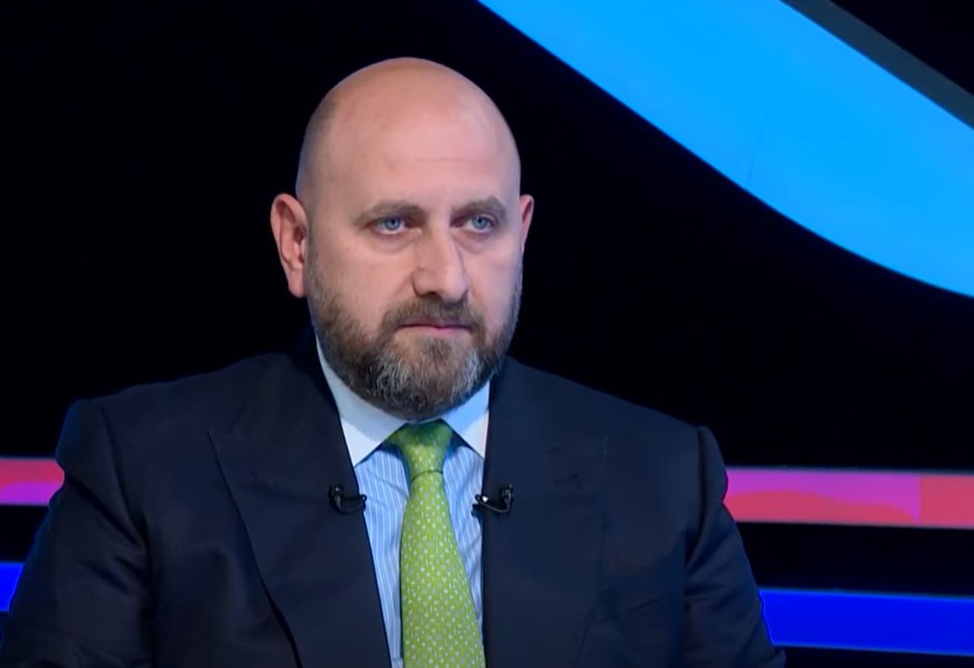
YEREVAN, November 19. /ARKA/. Armenia must strengthen its financial reserves and remain prepared for potential external and internal shocks, given the ongoing geopolitical and economic uncertainty, stated Martin Galstyan, Governor of the Central Bank of Armenia (CBA). He made these remarks on Thursday while presenting the regulator’s assessment of the 2027 draft state budget to parliament.
Risks and the Creation of Financial Reserves
According to Galstyan, significant risks persist regarding economic growth, tax revenues, the execution of government expenditures, and financing conditions.
“The draft budget accounts for potential deviations from its underlying assumptions and forecasts. Specifically, a scenario analysis has been conducted, and measures have been evaluated to adjust budgetary flows and policy should these risks materialize. To manage such risks, there are plans to establish a reserve fund amounting to approximately 0.3–0.6% of GDP, as well as to maintain a liquidity buffer in the treasury stabilization account equivalent to at least 1% of GDP,” he said.
The CBA Governor noted that if risks arise, additional tax administration measures may be implemented, and spending priorities and volumes may be revised. Should significant adjustments be required to ensure fiscal sustainability, the medium-term fiscal policy could also be revisited.
Galstyan emphasized that the use of reserve funds must be subject to clear constraints. These resources should be directed primarily toward covering additional financial needs that arise from pre-identified macroeconomic or other fiscal risks. Central Bank Urges Expansion of Reserves
Galstyan noted that the draft state budget for 2027 continues the course toward medium-term fiscal consolidation and the strengthening of financial resilience. The planned policy will be moderately restrictive and countercyclical in nature.
According to him, to expand economic potential and ensure medium-term fiscal sustainability, it is essential for the government to consistently restrain the growth of current expenditures and obligations, while also effectively implementing planned capital investments.
Galstyan further emphasized the need for continuous risk monitoring and the strengthening of financial reserves, which would enable a response to potential shocks.
“We believe that under the current favorable economic conditions—and given the high level of aggregate demand—there is an opportunity to further expand fiscal space and build up additional reserves,” the Central Bank chief stated.
He added that this would allow for more effective absorption of potential shocks in the medium term, while ensuring macroeconomic stability and bolstering fiscal sustainability.
On November 18, the Minister of Finance of the Republic of Armenia, Vahe Hovhannisyan, stated that as of the end of October 2026, Armenia’s international reserves had reached $7.2 billion—more than double the figure recorded in 2021. -0-