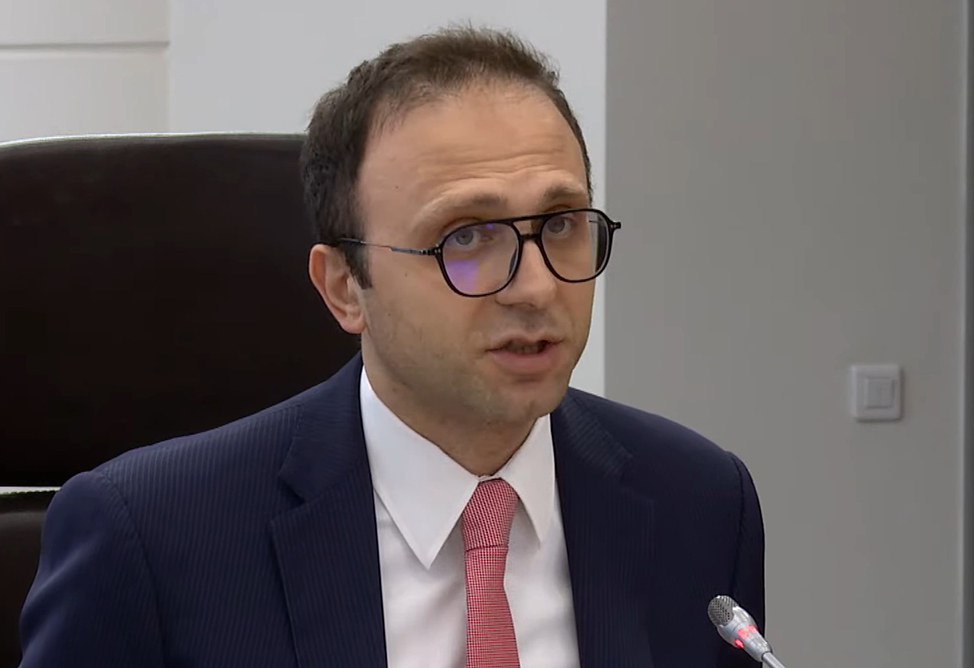
YEREVAN, August 5. /ARKA/. Armenia’s Central Bank is developing a set of tools to combat financial and cyber fraud, the deputy chairman of the Central Bank Armen Nurbekyan said at a press conference on Tuesday.
According to Nurbekyan, the risks of fraud are growing against the backdrop of the digitalization of the economy and the increased use of digital financial products around the world, including in Armenia. Several months ago, the country experienced a similar wave, prompting the Central Bank to establish a system for managing the consequences of fraud.
He explained that one such system is the “zero liability system.” When fraud occurs for an amount under certain parameters, the client is not liable since the insurance mechanism is in effect.
Nurbekyan noted that no final decision has been made on this issue yet. To understand which tools can be used, the banking system is discussing certain options with insurers, including stricter identification standards for certain transactions.
He emphasized the importance of maintaining balance when choosing one solution or another.
On the one hand, he said that, given the fact that more people can become victims of fraudsters due to their rash steps against the backdrop of digitalization, the regulator’s goal is to provide insurance in the event of a large number of such cases.
However, Nurbekyan explained that international experience shows people become less vigilant when insurance mechanisms are widely used, which creates more opportunities for cybercriminals. He added that it is too early to discuss timing since some tools may require legislative changes.
“Within three months, we want to develop a conceptual vision of the Central Bank and decide what kind of solution we want. The project’s outlines are already in place, and the Central Bank Board has an idea of the directions, but the tools are quite complex,” he said.
In answer to the question of who should take financial responsibility, banks or the state, Nurbekyan said it depends on why a person became a victim of fraud.
According to him, these reasons are different, but most of them come down to the transfer of personal data to a third party. There are also cases in which fraud occurs due to a financial institution’s negligence.
“In all cases where problems are identified due to the negligence of financial institutions, these issues will be resolved quickly in favor of the client. This has been the case so far,” he said.
When discussing cases in which a person inadvertently transfers personal data to a third party, the deputy chairman of the regulator said that compensation at the state level is possible. However, it does not create any market mechanisms to solve this problem.
He added that regulation should require insurance for risks up to a certain monetary threshold, subject to certain parameters. Such insurance can take different forms. Insurance companies can provide these services to banks, or banks can provide this protection independently. In a broader sense, however, this is a market decision that assesses a particular risk. The Central Bank will impose this regulation on the financial system in one form or another,” he emphasized.
Nurbekyan added that the regulator’s task is to establish a balance in which these risks would be manageable in at least 80–90% of fraud cases while also ensuring that the system does not create a favorable environment for fraudsters.
He noted that, based on analyses, victims of fraud were often people who followed advertisements on social media and clicked on suggested links, leading to unpredictable consequences.
He explained, “We sent letters to large international companies that manage social networks, urging them to manage these risks and take responsibility for advertising on their platforms, especially financial services.”-0-