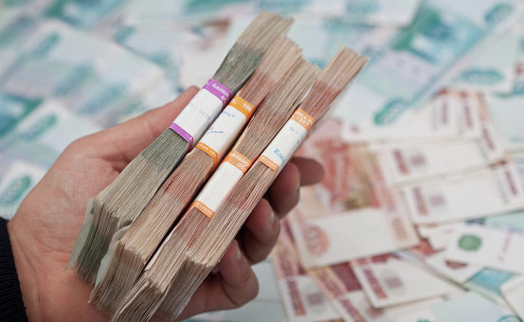
YEREVAN, October 6. / ARKA /. The amount of remittances sent home by Armenian labor migrants from the Russian Federation is falling as Russian ruble’s free fall extends into new record-breaking territories. According to the Central Bank of Armenia, the amount of private remittances in August 2014 from Russia arriving through the banks for non-commercial purposes decreased by 7.7% from August 2013, to about $161.6 million.
The downward trend has been observed for the third consecutive month. Thus, the amount of Russian money transfers to Armenia in June fell by 4.6%, by 6.6% in July and by 7.7% in August.
A former head of the Central Bank of Armenia, Bagrat Asatryan, blames the drop on depreciating ruble that hit a new historical low today falling behind 40 rubles for a USD. In Armenia the Russian ruble lost 15% since the beginning of the year trading on October 6 at 10.27 drams, down from 12.26 drams at the beginning of the year.
According to Central Bank data, the bulk of remittances sent to Armenia in the first eight months of 2014 – around 87%- came from Russia.
In the meantime the aggregate private transfers to Armenia in August slashed by 5.8% from 2013 August to approximately $185.7 million. In July their amount was 4.4% down year-on-year.
Remittances along with foreign investments are a key factor of economic growth in the country. According to the Central Bank, in 2013 a total of $1.869.7 billion were remitted to Armenia, which made 17.3% of the GDP.
Asatryan says an average economic growth rate –about 6-7%- must be backed by a 10-15% annual rise in remittances and investments. The decline in remittances in the first 8 months this year amounted to about 3%, which Asatryan says can cause a serious blow to the economy.
The decline made many international financial institutions revise downward their forecasts about Armenian economy growth linking it with the slowdown in the Russian economy because of Western sanctions.
In particular, following a stronger than expected decline in net exports and slowing remittances in H1 2014, Moody’s revised Armenia’s growth forecast down to 2.1% in 2014 and 2.3% in 2015 from 3.2% and 3.6%, respectively. The revised figures are based on Moody’s forecast for the Russian economy to contract by 1.0% in 2014, followed by stagnation in 2015.
The IMF has also revised its forecast to 2.6% from earlier projection of 4.3%; The Asian Development Bank now forecasts a 3.8% growth, down from 4.8%. EBRR’s revised forecast is 3% and the World Bank’s forecast is 5%, by 0.2 percentage points down from the government’s projection. -0-