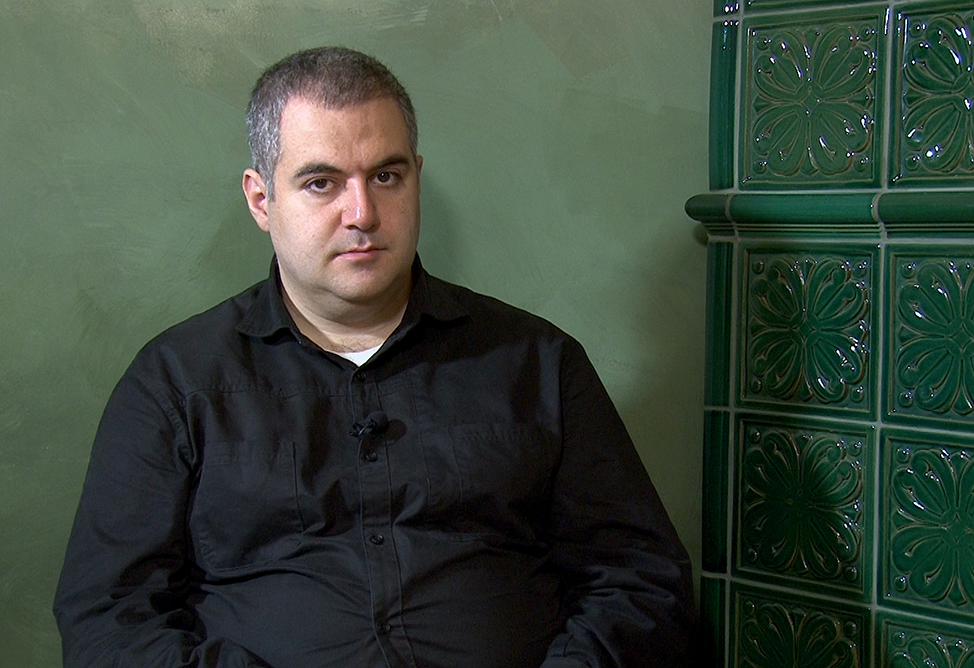
YEREVAN, July 17. /ARКА/. The recommendations of the MONEYVAL report on Armenia do not pose a direct threat to the country’s economy, but their implementation must be proportionate and not create unjustified barriers for bona fide businesses and investors, according to economist Hrant Mikaelyan.
The report of the Council of Europe Committee of Experts on the Evaluation of Anti-Money Laundering Measures and the Financing of Terrorism (MONEYVAL) on Armenia documented the country’s progress in developing its anti-money laundering and counter-terrorist financing (AML/CFT) system. At the same time, it highlighted areas requiring further work, including the effectiveness of investigations, prosecutions, and confiscation of criminal assets, as well as oversight of certain sectors of the economy.
Balance Between Control and the Investment Climate
Mikaelyan does not consider the shortcomings identified in the report a serious obstacle to the Armenian economy. In his opinion, the purpose of such assessments is to increase the resilience of the national system to the risks of money laundering and terrorist financing. In an interview with ARKA, he noted that tightening controls means additional procedures and costs for market participants, so new requirements should be risk-based and not hinder the work of bona fide investors.
“Any tightening will lead to a reduction in investment flows and complicate investment, creating new regulatory bodies and new regulatory instruments. And we are already facing a shortage of investment. Therefore, no, I don’t think the obstacles identified in this report hinder the Armenian economy in any way,” he emphasized.
At the same time, the economist noted that the investment climate is influenced not only by assessments from international organizations, but also by a broader range of factors: the quality of institutions, the predictability of regulation, the protection of property rights, and the overall foreign economic environment.
Reputational Risks
The expert sees no reputational risks for Armenia on the international stage.
“For many years, Armenia has maintained high positions in many economic rankings, such as the Index of Economic Freedom or Doing Business. But this hasn’t helped the investment climate, because there are many other factors,” he noted.
According to the economist, the recommendations to strengthen monitoring (of several economic sectors – ed.) are not due to a worsening situation, but to the increased attention paid to Armenia, which the European Union currently views as a more priority partner.
Speaking about the insufficient progress noted in the report, Mikaelyan said that this has both institutional and investment implications.
“There is also a contradiction here between the strictness of legislation on cash flows and the influx of investment. And for Armenia, in fact, the influx of investment is currently a much higher priority than the monitoring assessments of the Council of Europe and the European Union,” he emphasized. This, he said, is also related to sanctions against Russia.
“And financial and economic activity related to Russia has become a huge driver of economic growth for Armenia in recent years. Naturally, the European Union would like to completely stop these economic relations. And here, again, we shouldn’t delude ourselves: the issue isn’t Armenia, but Russia. And, accordingly, the level of European assessment of the Armenian financial system speaks less about finances than about the state of integration and institutional cooperation,” he said.
Risks and Regulatory Neutrality
The economist believes that the regulator should pay increased attention to sectors with large cash flows and complex transaction structures, including gaming, mining, and investment funds. He also emphasized the need for political and institutional neutrality in supervision.
In his opinion, trust in financial regulation and its impact on the economy will depend primarily on the consistent and equal application of rules to all market participants.
“In recent years, we’ve seen large financial flows from oligarchs connected to the government, and the fight against corresponding flows from opposition oligarchs. And this is far more important for the economy than the adoption of these regulations, which the Council of Europe is evaluating. Therefore, maintaining neutrality is more important here,” he explained.
Mikaelyan also drew attention to the use of nationalization.
“The government has now developed a particular taste for nationalizing the assets of opposition politicians. We saw the nationalization of part of the Zangezur Copper and Molybdenum Combine. Armenian electricity grids were recently nationalized, and now the prime minister has begun nationalizing Gagik Tsarukyan’s companies,” he said.
According to him, if the regulator uses transparency arguments to nationalize the assets of large companies, this will be the one that will hurt the Armenian economy, not the fight against financial flows. Measures for Measurable Progress
“As an economist, I don’t think these recommendations should be a priority for Armenia. They could be both beneficial and harmful. The most important thing is that the regulator must be neutral, and above all, politically neutral,” Mikaelyan concluded.