



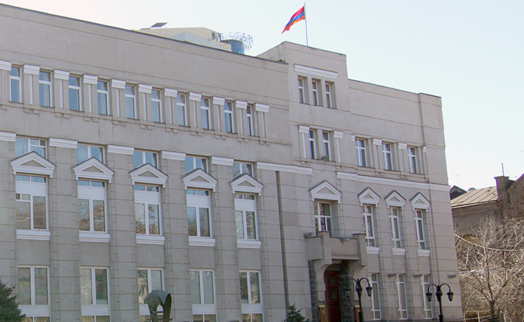
YEREVAN, July 17. /ARKA/. The audit at the Central Bank of Armenia should be conducted by an organization chosen by the government or the parliament, Ashot Tavadyan, a professor at the Armenian State University of Economics, said on Friday.
He finds it reasonable to empower the government or the National Assembly to choose an outside auditor to keep control over the foreign state debt.
It is specified in the law on the Central Bank of Armenia that the regulator chooses an auditor thought such a practice is rare in the world.
The central bank’s auditor was ‘PricewaterhouseCoopers Armenia’ LLC (PwC) in 2013-2015 and before that KPMG and Grand Thornton International conducted audit.
Tavadyan pointed out the refinancing rate as another problem. The regulator is free in forming its expenses, and this means that if expenses grow, the refinancing rate will rise.
«Therefore, if the expenses are under the government-chosen organization, motivation for keeping the refinancing rate at a high level will be connected only with retaining stability in prices, but not with seeking benefits,» the economist said.
He said Armenia’s public debt amounts to $4.5 billion, of which around $450 million is the central bank’s debt. The country’s internal debt is $600 million and the government’s debt is $3.5 billion.
On June 22, the National Assembly of Armenia passed the government-proposed amendments to the public debt law.
The government proposes to remove the central bank’s debt from ‘the public debt’ concept.
According to the National Statistical Service of Armenia, the country’s total public debt amounted to $4630.2 million in late May after shrinking 0.6% over one month. –0–


