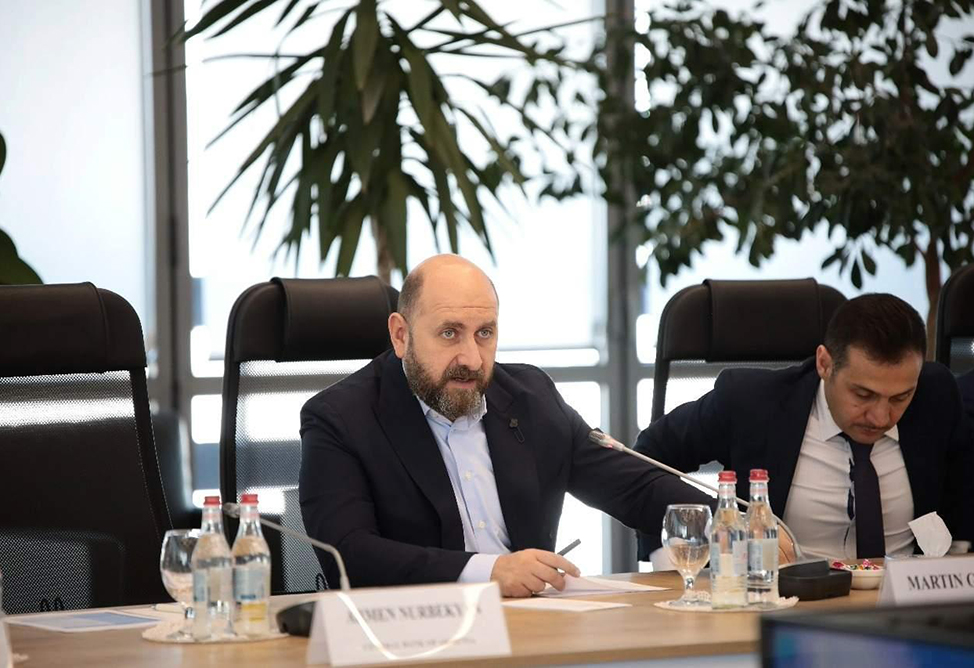
YEREVAN, May 5. /ARКА/. The Central Bank of Armenia is not observing capital outflow from Armenia amid regional uncertainty, stated Deputy Chairman Hovhannes Khachatryan.
According to him, in March, two weeks after the escalation in the Middle East began, the Central Bank of Armenia expressed some pessimism, for example, regarding the risk premium and the possibility that problems in the region could lead to capital outflow from the region, including Armenia.
“At the moment, we have not observed such an outflow, and in this regard, we have softened our wording,” he said at a press conference on Tuesday.
Khachatryan noted that fiscal indicators indicate that the deficit may not exceed the planned figure.
“Various uncertainties related to social and insurance costs seem more manageable to us,” he said. At the same time, the Deputy Chairman of the Central Bank stated that he does not see any possibility of a quick resolution to the situation around the Strait of Hormuz, particularly regarding energy prices.
“We do not yet see a point at which global interest rates in partner countries will decline significantly, as previously expected before the war,” Khachatryan said.
According to the Central Bank’s monetary policy statement, in the first quarter of 2026, amid geopolitical uncertainty, rising energy prices, and their volatility, the risks of weakening demand in the global economy and Armenia’s partner countries have increased. In the US, consumer demand remains weak, in the Eurozone, growth is being held back by structural problems and dependence on energy, and in Russia, signs of a slowdown in the economy and domestic demand are being recorded. At the same time, tensions in the Middle East increase the risk of renewed increases in energy and commodity prices, which could force central banks in leading countries to maintain high interest rates for longer or even raise them.