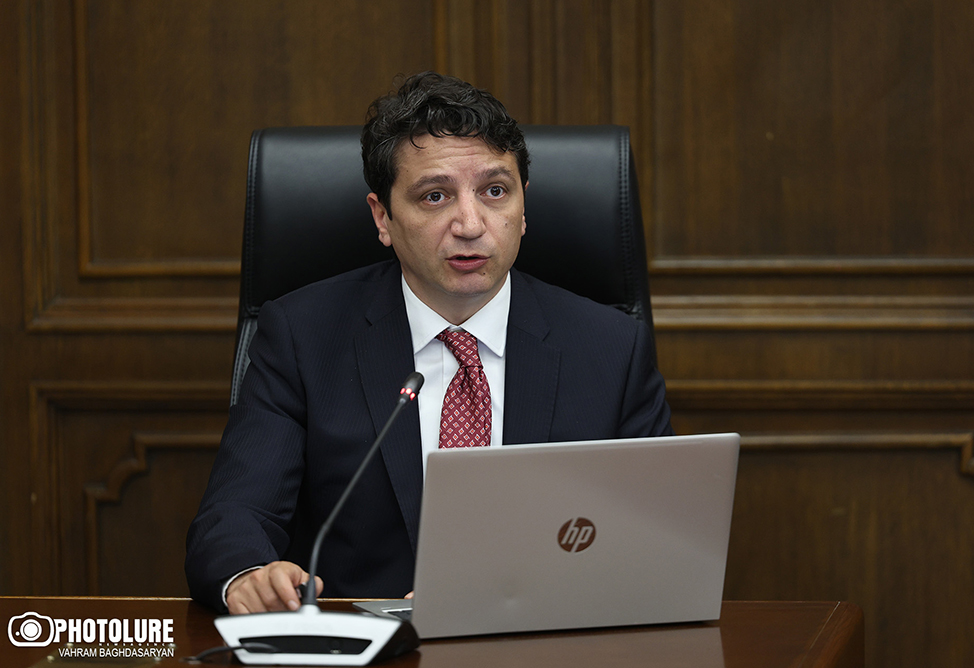
YEREVAN, November 2. /ARKA/. Armenia’s public debt will stabilize at around 47% of GDP. This was announced by RA Finance Minister Vahe Hovhannisyan while presenting the draft state budget for 2027 to parliament.
According to him, public debt servicing costs in 2027 will amount to 417 billion drams, or 10.2% of total budget expenditures, 11.6% of revenues, and 3.1% of GDP.
The minister noted that this figure also includes risks associated with possible exchange rate fluctuations.
“If the dram exchange rate remains at its current level, these costs will be significantly lower,” Hovhannisyan said. He also recalled that the 2026 budget also allocated over 416 billion drams for debt servicing, taking into account the risks of exchange rate fluctuations.
Public Debt Structure
According to Hovhannisyan, the government intends to maintain the current public debt structure, in which dram-denominated liabilities will prevail over foreign currency-denominated ones, and domestic debt will prevail over foreign debt.
Furthermore, it is planned to maintain the share of fixed-rate debt above established targets. Government treasury bonds will continue to make up the majority of the debt portfolio.
The minister stated that key public debt management indicators will remain within established benchmarks in the coming years.
At the same time, he added, special attention is being paid to the average remaining maturity of the debt. The established benchmark is 7-10 years, but in the current instability, issuing longer-term debt instruments is becoming significantly more expensive. “Here we must find the right balance between expenses and the timing of our issues,” the Finance Minister noted.
Eurobond Refinancing Risks
Hovhannisyan also reported that there are risks associated with the refinancing of Armenian Eurobonds in 2029, 2031, and 2035.
According to him, to manage these risks, the government, as before, is repurchasing a portion of the debt obligations, smoothing out their repayment schedule.
This policy, the Minister explained, is aimed at preventing further increases in the cost of public debt due to market fluctuations.
Overall, Hovhannisyan assessed the debt risks as manageable, noting that Armenia’s public debt management indicators have significantly improved in recent years.
Regarding Public Debt
As Hovhannisyan stated in September, Armenia’s public debt as of June 30, 2026, amounted to 5.12 trillion drams, compared to 5.30 trillion drams as of December 31, 2025. In dollar terms, the national debt amounted to $13.9 billion.
Earlier, Deputy Minister of Finance of the Republic of Armenia Avag Avanesyan stated that the Armenian government aims to increase the national debt-to-GDP ratio to 45%.