
YEREVAN, November 2. /ARKA/. The financial agenda for the week included a review of bank capital requirements, preparation of a framework for thematic bonds, and the development of a digital financial services infrastructure. In the capital market, attention was focused on government bonds, while the tax agenda was shaped by changes to the income declaration procedure.
1. Banking Regulation: The Central Bank Sets New Level of Countercyclical Capital Buffer
On October 26, the Central Bank of Armenia announced a decision to increase banks’ countercyclical capital buffer by 0.25 percentage points, to 2.25% of risk-weighted assets. The decision was adopted by the Central Bank Board on October 20 and comes into effect on May 1, 2027.
In practice, this decision may set an additional parameter for capital planning and lending operations.
2. Thematic Bonds: The Ministry of Finance Develops Framework for Issues
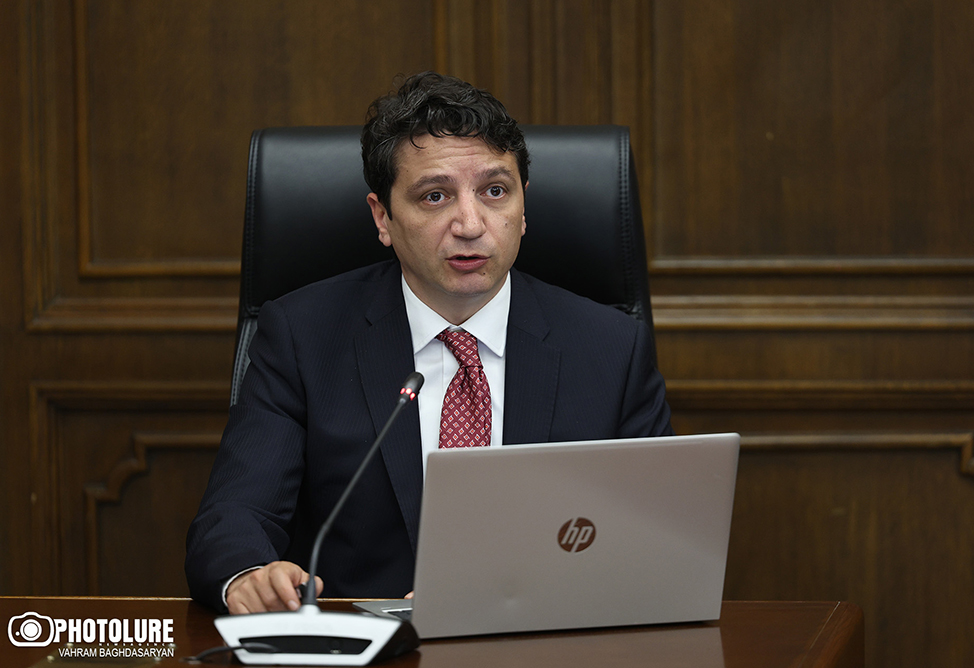
The Ministry of Finance of Armenia is developing a comprehensive framework for the issuance of thematic bonds in domestic and international capital markets. As Finance Minister Vahe Hovhannisyan announced on October 26 at an event on the sidelines of COP17, the document will define the terms and criteria for the application of debt instruments focused on sustainable development.
For financial institutions and investors, the current stage consists of developing rules for the application of such instruments. The criteria for funding areas and the terms of future issues may be of practical importance.
3. Foreign Exchange Market: Dollar and Euro Weakened, Ruble Strengthened
According to the Central Bank of Armenia, from October 26 to 30, the dollar exchange rate fell from 360.88 to 360.14 drams, a decrease of 0.21%. The euro depreciated from 404.11 to 403.36 drams, a decrease of 0.19%. The ruble exchange rate increased from 4.4762 to 4.4854 drams, a decrease of 0.21%.
For companies, this trend could mean a decrease in the dram equivalent of dollar and euro liabilities, while simultaneously reducing the cost of receipts in these currencies. For ruble payments and revenue, the ratio reversed.
4. Government Bond Market: AMX Conducted Transactions with Bonds of Various Maturities
On October 29, the Armenia Stock Exchange held three auctions totaling 70 billion drams: a placement of 11-year government bonds for 40 billion drams and a buyback of three-year and five-year bonds for 15 billion drams each.
The yield at the weighted average price was 8.8186% for the 11-year issue, 7.8721% for the three-year issue, and 8.1792% for the five-year issue. Thus, the total volume included both fundraising through placements and transactions to buy back previously issued bonds.
For market participants, the results may reflect the terms of transactions with government bonds of various maturities.
5. Fintech and Banking Infrastructure: The Central Bank Outlines Open Banking Areas
In an interview with Hetq, Martin Galstyan, Chairman of the Central Bank of Armenia, announced plans to implement Open Banking and Open Finance, as well as changes to approaches to banking licensing. Among the areas under discussion, he named investment banks and organizations with separate electronic capabilities.
For the market, these statements may outline areas of regulatory work with data and the specialization of participants. Practical operating conditions are determined by regulations.
6. Client Protection: The Central Bank Warns of Forged Documents Posed by the Regulator
On October 28, the Central Bank reported an increase in the use of forged powers of attorney, certificates, and other documents presented as issued by the regulator to obtain loans on behalf of individuals and other fraudulent transactions.
For financial institutions, this announcement updates the verification of representatives’ credentials and the authenticity of documents. For clients, confirmation of the basis for a transaction before transferring data or formalizing obligations may be of practical importance.
7. Brokerage Market: ARKA Study Highlights Limitations to Investor Participation
On October 27, ARKA News Agency presented the summary results of its comparative study, “Brokerage Market in Armenia – 2026,” based on interviews with representatives of five major market participants. The study compares bank and investment company assessments, client service approaches, and demand for financial instruments.
For market participants, the study can provide a basis for comparing business models and client strategies. Its results can systematize assessments of barriers to investment and help identify areas for brokerage services development.
8. Income Declaration: Automatic Completion Expanded and Deadlines Clarified
On October 26, the State Revenue Committee of Armenia announced a simplification of the annual income declaration process for individuals. Specifically, the list of automatically completed information has been expanded, and automatic submission of pre-filled declarations after the deadline has expired is now possible. The State Revenue Committee emphasized that the declaration system does not introduce new tax obligations.
For citizens, verifying pre-filled data and making any necessary additions may be important. For bank clients, the correct reflection of interest income and consent to its automatic inclusion may remain a separate issue.
Weekly Summary
The week was characterized by the continued institutional adjustment of the financial market: bank capital requirements were supplemented by discussions of digital service models and the preparation of the groundwork for thematic bonds. Capital planning, debt financing terms, foreign exchange position management, and the accuracy of financial information remain the focus of professional participants.