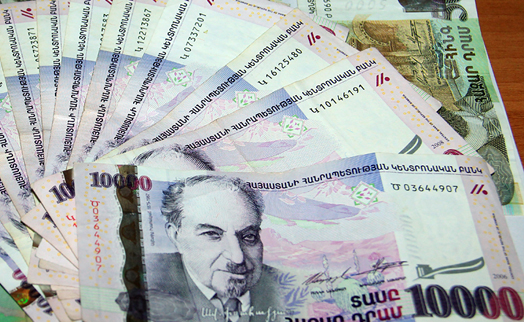
Armenian deflation keeps on in the first quarter

YEREVAN, April 6. /ARKA/. In the first quarter of 2017 Armenian consumer prices dropped by 0.3%, when compared to the same time span of 2016, according to numbers, released by the National Statistical Service (NSS).

According to official data, prices of food products (including alcoholic beverages and tobacco products) increased by 2.8%, while prices of non-food products decreased by 3.5%, and services fell by 2.5%.

In March 2017 consumer prices fell by 0.1% from the year earlier. More exactly, prices of food products (including alcoholic beverages and tobacco products) increased by 3.3%, while prices of non-food products and services decreased by 3.5% and by 2.6% respectively. According to statistics, Armenia closed 2016 with 1.4% deflation.

The inflation rate, projected by the government for 2017 is 4% (± 1.5%); the GDP growth is projected at 3.2%. -0-

spot_img

POPULAR

Central Bank of Armenia does not expect a significant inflationary effect from the increase in excise taxes

Raising excise taxes on certain goods will not lead to significant inflationary consequences in Armenia, according to Central Bank Chairman Martin Galstyan.

”Teach For Armenia” is the June beneficiary of the ”Power of One Dram”

The May beneficiary of the ''The Power of One Dram'' initiative was the ''Vahe Meliksetyan'' Foundation.

Armenia records an influx of capital and growing interest from international investors – Central Bank head

Armenia is experiencing a significant influx of capital and growing interest from international investors, said Martin Galstyan, Chairman of the Central Bank of Armenia.

Armbanks Weekly Digest: Key Events in Armenia’s Financial Market (June 15–21)

The financial week in Armenia was marked by Central Bank decisions, discussions of public debt parameters, inflation dynamics, and institutional changes in the banking sector.

VTB (Armenia): Instant transfers to Russia are becoming increasingly popular

Retail clients of VTB (Armenia) continue to actively use the free transfer service to MIR cards of Russian recipients. Over the past six months, transfer volume has grown by 40%.

LATEST NEWS

spot_imgspot_imgspot_img