Armenian deputy prime minister commens on the need to switch to cashless payments as part of the fight against coronavirus

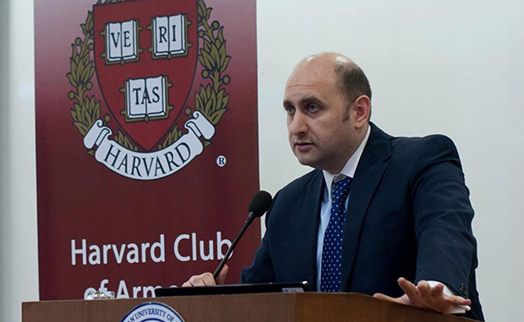
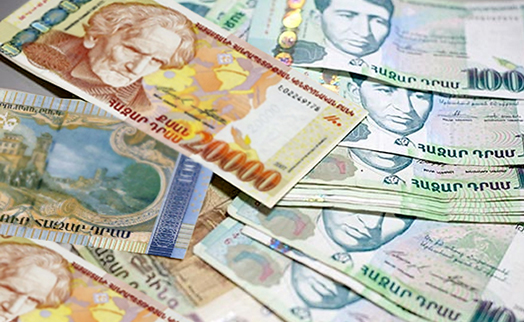
YEREVAN, March 30. /ARKA/. Speaking at a news conference today, Armenian Deputy Prime Minister Mher Grigoryan commented on the need to reduce cash flow in the country and switch to cashless payments as part of the fight against the spread of coronavirus.

“Of course, cash payments in this situation is a problem, but the question is how efficiently can we switch to non-cash payment, and not to change one cash instrument with a more dangerous cash analogue,” Grigoryan said.

The Deputy Prime Minister said the draft law on the reduction of cash turnover received conceptual approval, and, in his opinion, should be adopted quickly.

He said reducing cash turnover and moving to non-cash is a problem, but if events develop in such a way that the pace of this reduction will not be enough and cash circulation will become a threat, then the Central Bank will have something to think about.

The Union of Banks of Armenia called earlier on citizens to make non-cash payments as one of the measures to combat the spread of coronavirus.

From March 16 to April 14, a state of emergency is in force in Armenia. The goal is to curb the spread of coronavirus. On March 24, the government imposed stringent restrictions on the movement of citizens and banned some types of economic activity until March 31.

As of March 30, in Armenia, 482 confirmed cases of coronavirus were reported. Thirsty people recovered and three patients died. ($1 – 498.43 dram). –0–

spot_img

POPULAR

“Kamurj” UCO CJSC bonds worth 1 billion drams listed on AMX

"Kamurj" UCO CJSC bonds have been listed on the Armenia Securities Exchange (AMX), the exchange's press service reported.

Tokenization could change the investment philosophy in Armenia – expert

Tokenization is a serious mechanism that could change the investment philosophy in Armenia, noted Felix Vartanov, CEO and shareholder of the investment and holding company BlackRiver Capital (Dubai).

Armenia has introduced a new model for assessing public debt sustainability

Armenia has introduced a new model for assessing public debt sustainability, while maintaining the previous ones.

Armenia’s gross reserves rose to $5.5 billion in February, providing 4.1 months of import coverage – WB

Gross reserves in Armenia increased, reaching $5.5 billion at the end of February, equivalent to 4.1 months of import coverage, according to the World Bank's "Armenia Monthly Economic Update – March 2026."

Armenian capital market needs not only technology, but also a mature regulatory and infrastructural environment – ​​NABIX founder

The digital infrastructure of the Armenian capital market has made significant progress in recent years, but the market still lacks a more robust regulatory and technological framework for the full development of new financial instruments.

LATEST NEWS

spot_imgspot_imgspot_img