YEREVAN, July 16. /ARKA/. The report of the Council of Europe Committee of Experts on the Evaluation of Anti-Money Laundering Measures and the Financing of Terrorism (MONEYVAL) on Armenia documented the country’s progress in developing its anti-money laundering and counter-terrorist financing systems, but identified insufficient effectiveness in investigations, prosecutions, and confiscation of criminal assets, as well as the need for stronger oversight in several economic sectors.
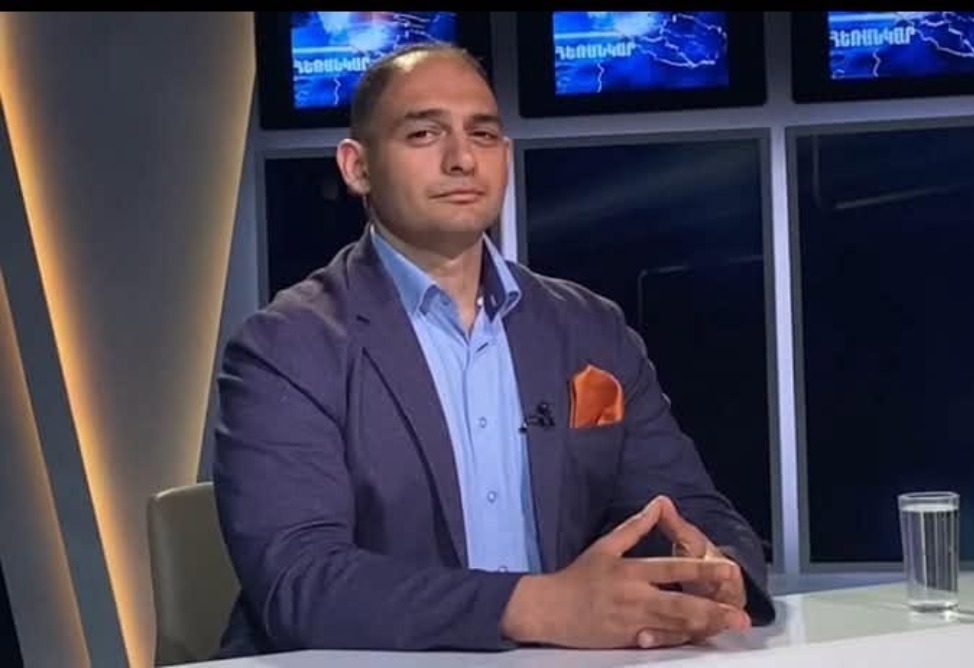
In an interview with ARKA, Aghasi Tavadyan, founder of tvyal.com, presented his perspective on MONEYVAL’s findings, the associated economic and reputational risks, the impact of transit capital flows on the Armenian economy, and the measures needed to increase the transparency of the financial system.
Transit flows have supported economic growth.
Armenia has received significant economic benefits from transit capital flows in recent years, but the lack of transparency regarding the origin of some of these funds creates reputational and institutional risks for the country, according to Tavadyan. According to him, Armenia’s unique geographic and economic position simultaneously opens up opportunities for attracting capital and increases the requirements for monitoring financial flows.
Tavadyan recalled that after 2022, Armenia, as a small, open economy neighboring Russia and Iran and integrated into the international financial system, became a transit point for significant amounts of capital.
“These flows enriched the Republic of Armenia and were redirected to third countries, such as Switzerland and the UAE, which, from a legal perspective, have a fairly favorable attitude toward capital of unknown origin,” he said.
According to the expert, Armenia’s 12.6% economic growth in 2022 was largely due to the influx of Russian capital following the outbreak of the Russia-Ukraine conflict.
“Half of this 12.6% came from the financial and IT sectors. We certainly benefited from this,” Tavadyan noted. He also recalled that from mid-2023 to mid-2024, Armenia served as a transit country for Russian gold.
Furthermore, according to the expert, a significant amount of Iranian capital began flowing into Armenia in September 2025, which also contributed to maintaining high economic growth rates in 2025.
Enhanced monitoring is not the only risk to investment.
Speaking about Armenia’s inclusion in the MONEYVAL enhanced follow-up monitoring regime, Tavadyan noted that the country’s authorities have traditionally sought to maintain a balance in relations with various countries so that Armenia could serve as a regional transit hub.
At the same time, he noted, factors not directly related to the MONEYVAL report are already impacting the country’s investment attractiveness.
The expert identified the insufficient diversification of foreign investment as one of the problems. He noted that capital from certain countries is concentrated primarily in a few sectors, increasing the economy’s dependence on political and economic relations with specific countries. “If, say, problems arise in relations with one of the countries, investments in an entire industry could be frozen,” Tavadyan said.
He considers a more serious factor to be the decline in investor confidence in Armenia’s institutional and legal environment. He noted that over the past two years, the Armenian government has concluded a number of transactions and made decisions that raise certain legal issues, reducing the country’s investment attractiveness.
Tavadyan cited the nationalization of Electric Networks of Armenia CJSC and the transfer of a stake in the Zangezur Copper and Molybdenum Combine to the state as examples of this.
In his opinion, foreign investors pay attention not only to assessments and reports from international organizations, but, above all, to property protection practices, the predictability of government decisions, and investment security guarantees.
Among other significant factors, he also highlighted the availability of skilled labor and the cost of labor.
Beneficiary Transparency Needs to Be Enhanced
MONEYVAL recommended that Armenia strengthen oversight of virtual asset service providers and private investment funds, improve risk assessment in the real estate sector, and enhance the reliability of information on ultimate beneficial owners.
Tavadyan noted that certain steps have already been taken in Armenia to disclose ultimate beneficial owners.
“Over the past two years, the institution of real beneficiaries has been developing. This is good for managing capital flows, allowing the state to see where capital flows come from and for what purpose,” he said.
The expert called the development of this institution a positive step, but emphasized that due to the scale of capital transiting through Armenia, many questions remain unresolved.
Legislative changes alone are not enough.
To achieve measurable progress by the next MONEYVAL report, Armenia needs not only to improve legislation but also to improve the transparency and manageability of financial flows, Tavadyan believes. “The more open, transparent, and controlled financial flows are, the more benefits they can bring to the state,” he said.
According to the expert, Armenia, as a small, open economy, a member of the Eurasian Economic Union, a neighbor of Iran, and part of the global financial system, has benefited from a significant volume of transit financial funds.
“This money has enriched us, but the origin of some of the funds coming from warring countries raises many questions,” Tavadyan concluded.