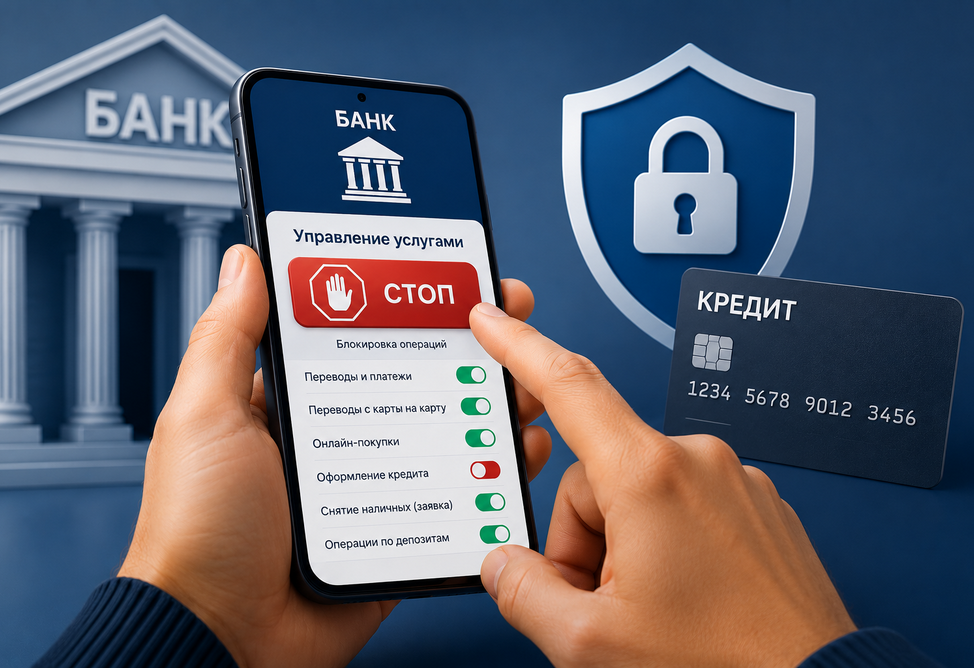
YEREVAN, July 16. /ARKA/. Since July 1, 2026, financial institutions in Armenia providing remote services have implemented the “STOP” mechanism, allowing customers to independently restrict individual transactions or completely block remote financial services.
According to Armenuhi Mkrtchyan, Head of the Consumer Support Center of the Central Bank of Armenia, at a press conference, the mechanism has been implemented by all banks and other financial institutions subject to the relevant regulation.
According to her, many customers have already taken advantage of the new tool.
What transactions can be blocked?
The function is available in mobile apps and online banking systems. In some apps, it may be called “Suspend Services.”
Customers can restrict specific transactions or select the “Stop All Services” function, completely blocking remote financial transactions.
The minimum list of transactions available for blocking includes:
Transfers and payments to third parties;
Card-to-card transfers;
Online purchases and card payments;
Submitting a cash withdrawal request through the app;
linking a card to an e-wallet or a new device;
applying for a new loan and using the unused portion of the credit line;
early termination of a deposit and remote withdrawal of funds;
opening a new account;
issuing a new bank card.
Financial institutions may add to this list transactions identified as having a high risk of fraud.
However, a loan block does not prevent the repayment of an existing loan. It only blocks the application of a new loan or the use of the available limit on an existing credit line.
How the protection works
If an attacker gains access to the banking app, they will be unable to use the blocked services. For example, if a loan block is set, it will be impossible to apply for a new loan remotely, and if deposit transactions are blocked, it will be impossible to withdraw funds from it.
However, this mechanism does not completely eliminate the risk of fraud. Blocking all remote services provides maximum protection, but in this case, the client also temporarily loses access to the relevant transactions. According to Mkrtchyan, the “Stop All Services” feature is intended primarily for emergency situations. If a client suspects that their app login details have become available to unauthorized persons, they can immediately block transactions and then contact the bank.
“In the case of fraud, speed is one of the most important factors, as a quick response helps limit losses,” she noted.
The blocking feature works in the mobile app and online banking, regardless of the device used to log in.
How to set and remove the blocking feature
A visit to a bank branch is not required to activate the feature. Clients simply log in to the mobile app and select the services they wish to block. In some cases, updating the app via Google Play or the App Store may be necessary first.
If the feature is not visible, clients can contact the bank for instructions. Financial institutions are also required to accept phone calls and block services if fraud is suspected.
Removing a blocking feature is more difficult than setting it: the financial institution must conduct full identification of the client.
Some banks allow transactions to be unblocked remotely, but this requires a 24-hour waiting period. If you visit a bank branch or payment service provider in person, the block can be lifted immediately.
There is no unified system for all banks yet
Currently, clients must set restrictions individually in each banking or financial app. There is no unified platform that allows for a single action to block loans or other transactions across all financial institutions.
According to Mkrtchyan, the Central Bank is working on a technical solution to this issue.
She emphasized that the “STOP” mechanism is only one element of protection.
“Customers must adhere to digital security rules, not share personal and banking information with third parties, and verify the websites where they make purchases,” she noted.
1,100 cases of fraud per year
According to the Central Bank, in 2025, banks registered and reported information on 1,102 cases of fraud to the regulator. The total damage amounted to approximately 876 million drams.
In 643 cases, fraudsters managed to obtain loans in the names of individuals. These statistics only include incidents that were reported to banks by clients and officially classified as fraud.