YEREVAN, April 28. /ARKA/. The World Bank Board of Executive Directors approved April 27 a US$30 million loan for the Power Sector Financial Recovery Program-for-Results (PforR) for Armenia.
This Project will support the Government’s efforts to maintain adequate and reliable electricity supply by improving the financial condition and governance of the state-owned power generation companies and the private power distribution company.
Throughout the last five years, the state-owned generation companies have been experiencing a shortage of cash to finance key expenditures, because of lending and spending for purposes not related to their core business of generating and supplying energy. This is how the Armenian Nuclear Power Plant (ANPP) and Yerevan Thermal Power Pant (YTPC) have accumulated large cash deficits amounting to US$104 million which accounts to 80 percent of their total estimated revenues for 2015.
If the financial difficulties of the ANPP and YTPC are not overcome, it will have significant impact on their ability to maintain the current levels of generation with resulting negative consequences on the cost and adequacy of electricity supply in the country. In 2012-2014, those two plants accounted for 42 percent of total annual electricity generated for domestic needs. Inability of ANPP and YTPC to generate power at current levels could push up the average cost of electricity supply and possibly cause an electricity deficit.
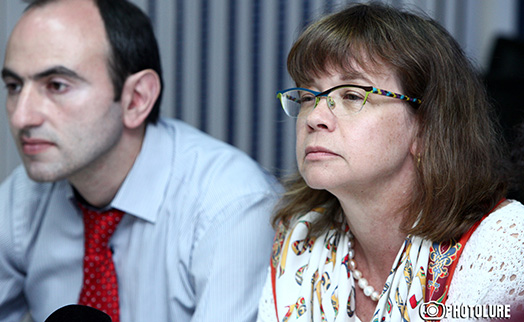
“Improvement of the financial standing and governance of the state-owned power generation companies, and a better managed financial relationship with the private power distribution company is critical for maintaining adequate and reliable electricity supply at affordable tariffs, “ says Laura E. Bailey, World Bank Country Manager for Armenia. “The Government is committed to improving the financial governance of these companies, and has already undertaken a number of steps in that direction as reflected in the Program for Financial Recovery of the Power Sector.”
There are four results areas which this Program will achieve: elimination of cash outflows of state-owned power generation companies for non-core business related reasons; reduction of expensive commercial loans, recovery of receivables, and repayment of YTPC’s payable for natural gas; setting of tariffs reflecting changes in the cost of electricity supply, and maintaining the generation capacity of the gas turbine at YTPC’s Combined Cycle Gas Turbine (CCGT) plant.
Since the end of January 2016, the generation companies were able to start repaying the loans because of the recovery of receivables from Electricity Network of Armenia (ENA), the only company operating the power distribution network. The recovery of receivables from ENA will allow financing the backlog of expenditures for critical repairs and maintenance, however, additional cash injection is needed to help YTPC and ANPP as they regain their solid financial condition.
“The beneficiaries of the Program are all electricity consumers in Armenia along with the state-owned generation companies and the private power distributer. Financial health of ANPP and YTPC, as well as ENA, will ensure they have enough resources to spend on maintenance and finance some of the new investments required for reliable supply of electricity. Moreover, 140,000 businesses and other legal entities connected to the network will also benefit because the Program will help to fully meet their demand for electricity in a reliable manner,” says Arthur Kochnakyan, World Bank Task Team Leader of the Project.
In 2012-2014, ENA suffered a cumulative loss of around US$50 million due to revenue shortfall, accumulated for reasons not under its control (e.g. dry years in terms of hydrology, longer-than-planned recurrent repair of ANPP). In addition, the existing regulation did not allow Public Services Regulatory Commission (PSRC) to adjust ENA’s tariff margin to reflect the full amount of difference between the actual and forecast cost of purchased electricity in subsequent tariff period.
The tariff margin was revised in 2015 to compensate for those losses incurred during previous years. Going forward, PSRC will be revising the methodology to allow reflecting in ENA’s tariff margin the 100 percent of loss (profit) plus interest cost (profit) due to the above highlighted difference.
The World Bank will provide a US$30 million IBRD loan of variable spread with a 14.5-year grace period and the total repayment term of 25 years. Since joining the World Bank in 1992 and IDA in 1993, the total IDA and IBRD commitments to Armenia amount to around US$2.3 billion. -0-