
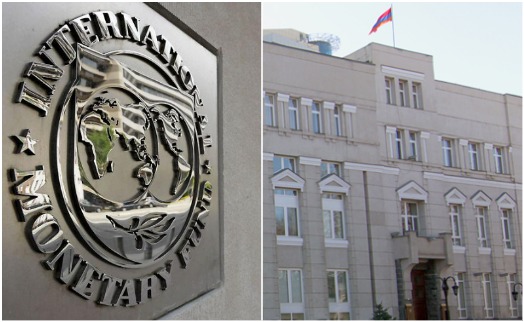
Future rate decisions of Armenian Central Bank should continue to be guided by evolution of inflation and inflation expectations -IMF

YEREVAN, 22 October. /ARKA/. Amid low inflationary pressures, the Central Bank of Armenia (CBA) has continued its gradual reduction of the policy rate to steer inflation towards its target, IMF said in a press release following an IMF team’s visit to Armenia, led by by IMF Armenian Mission Chief Iva Petrova  from 18 September to 1 October.

 Future rate decisions should continue to be guided by the evolution of inflation and inflation expectations.

It says the flexible exchange rate should remain a key shock absorber, and the authorities’ commitment to maintaining healthy international reserve buffers is welcome. Ongoing efforts to improve monetary, foreign exchange, and financial regulatory transparency are helping enhance CBA’s policy communication, and efforts should continue to strengthen the CBA’s prudential and supervisory frameworks. With its continuous financial risk monitoring, including the recent increase in the countercyclical capital buffer, the CBA remains vigilant in mitigating financial sector risks.

“The government’s structural reform agenda appropriately focuses on fostering inclusive growth, including by boosting labor force participation among the youth, women, and vulnerable populations, encouraging diversification in the country’s export basket and markets, and improving the business environment. Achieving these objectives requires developing and implementing concrete, fully costed employment and export strategies, prioritizing governance reforms, upgrading the insolvency framework, and rationalizing investment incentives to support quality investments.

On 10 September this year, the Central Bank of Armenia lowered the refinancing rate by 0.25 p.p. to 7.50%. That was the 11th consecutive lowering of the refinancing rate since June last year, and the sixth since the beginning of the current year. -0-

spot_img

POPULAR

Armenia has benefited from capital transit, but its origins pose reputational risks – Tavadyan

The report of the Council of Europe Committee of Experts on the Evaluation of Anti-Money Laundering Measures and the Financing of Terrorism (MONEYVAL) on Armenia documented the country's progress in developing its anti-money laundering and counter-terrorist financing systems, but identified insufficient effectiveness in investigations, prosecutions, and confiscation of criminal assets, as well as the need for stronger oversight in several economic sectors.

Strong banks’ capital and liquidity positions mitigate risks to Armenia’s financial stability – Fitch

Risks to financial stability in Armenia are mitigated by banks' strong capital and liquidity positions, according to the international ratings agency Fitch Ratings.

Armbanks Weekly Digest: Key Events in the Armenian Financial Market (July 6–12)

The week in Armenia's financial market was marked by accelerating annual inflation and activity in the government and corporate securities markets.

A banking STOP button has been launched in Armenia: the Central Bank has explained which transactions can be blocked

Since July 1, 2026, financial institutions in Armenia providing remote services have implemented the "STOP" mechanism, allowing customers to independently restrict individual transactions or completely block remote financial services.

MONEYVAL does not pose a direct threat to the Armenian economy, but requires balanced implementation of its recommendations – economist

The recommendations of the MONEYVAL report on Armenia do not pose a direct threat to the country's economy, but their implementation must be proportionate and not create unjustified barriers for bona fide businesses and investors, according to economist Hrant Mikaelyan.

LATEST NEWS

spot_imgspot_imgspot_img