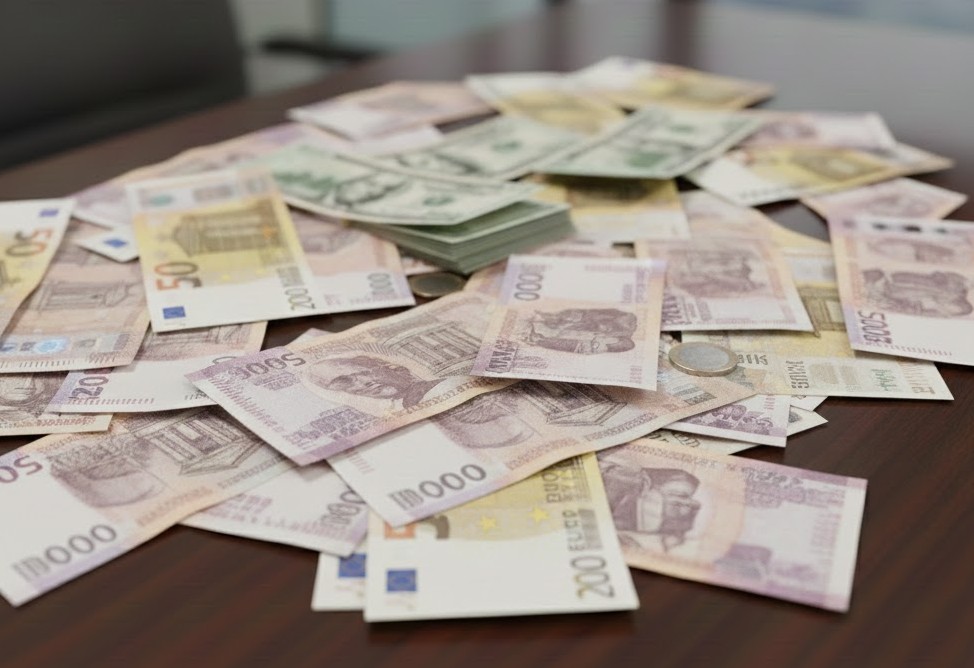
YEREVAN, November 3. /ARКА/. Restrictions on the export of cash rubles from Russia are not expected to have a significant impact on labor migrants from Armenia and relocators, according to Martin Galstyan, Chairman of the Central Bank of Armenia.
“I don’t see any major problems here, since 1 million rubles, converted into dollars, is approximately $12,000. We’re talking about the equivalent of 4-5 million drams,” Galstyan said at a press conference on Tuesday, responding to a question about the possible impact of the restrictions on labor migrants returning to Armenia with cash.
According to him, labor migrants typically transfer part of their earnings to Armenia throughout the year, so the amount of cash they bring back upon return is usually significantly lower than the established limit. “Therefore, I don’t think we will face any significant impact,” the head of the Central Bank noted.
Regarding the possible impact of restrictions on relocators, Galstyan stated that the Central Bank does not have sufficient data to model their financial behavior.
“I don’t know the behavioral characteristics of relocators, meaning we can’t model their behavior. But I still don’t think they necessarily bring 1 million rubles in cash to Armenia every time they enter or leave,” he said.
According to the head of the Central Bank, most relocators already use banking services in Armenia and have international payment cards. He also noted the use of Russian payment cards in the country.
Galstyan expressed the opinion that restrictions on the export of cash rubles will not have a significant impact on the financial behavior of relocators.
Regarding Russian Restrictions
Earlier, the State Revenue Committee of Armenia reminded that, effective September 29, 2026, Russia has introduced updated restrictions on the export of cash rubles to countries of the Eurasian Economic Union (EAEU), including Armenia, as well as Azerbaijan, Tajikistan, and Uzbekistan.
According to this decree of the Russian president, individuals are prohibited from exporting cash rubles in amounts exceeding 1 million rubles, while legal entities and individual entrepreneurs are prohibited from exporting any amount, except in cases specified by the decree. Specifically, export is permitted through certain international airports in Russia with the presentation of required supporting documents.