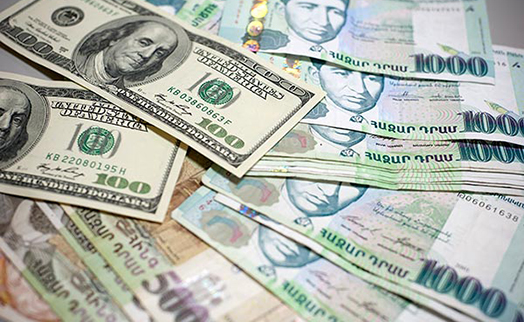
YEREVAN, April 14, /ARKA/ Remittances to Armenia in 2015 made 19.2% of its GDP, according to the World Bank’s latest edition of the Migration and Development Brief, , released on April 13.
It says remittances to developing countries grew only marginally in 2015, as weak oil prices and other factors strained the earnings of international migrants and their ability to send money home to their families,
Officially recorded remittances to developing countries amounted to $431.6 billion in 2015, an increase of 0.4 percent over $430 billion in 2014. The growth pace in 2015 was the slowest since the global financial crisis. Global remittances, which include those to high-income countries, contracted by 1.7 percent to $581.6 billion in 2015, from $592 billion in 2014.
The slowing in remittances growth, which began in 2012, was exacerbated last year by low oil prices, which are taking a toll on many oil-exporting remittance-source countries, such as Russia and the Gulf Cooperation Council (GCC) states.
As a result, many remittance-receiving countries, including India, the world’s largest remittance recipient, and Egypt saw remittances contract in 2015, as flows from the GCC countries slowed considerably. Remittances contracted by 20 percent to countries in the Europe and Central Asia region, with the heaviest impacts on Tajikistan and Ukraine , as a struggling Russian economy, and depreciation of the Russian ruble against the dollar contributed to the decline in remittances to the region.
India retained its top spot in 2015, attracting about $69 billion in remittances, down from $70 billion in 2014. Other large recipients in 2015 were China, with $64 billion, the Philippines ($28 billion), Mexico ($25 billion), and Nigeria ($21 billion).
Remittance flows to Europe and Central Asia were severely affected in 2015, contracting by 20.3 percent, due to the depreciation of the Russian ruble against the dollar and the slowdown in economic activity in Russia, a major source of remittances for the region. The region should, however, see a robust recovery this year, with remittances expected to grow by 5.1 percent to $36.3 billion, from $34.6 billion in 2015. -0-