



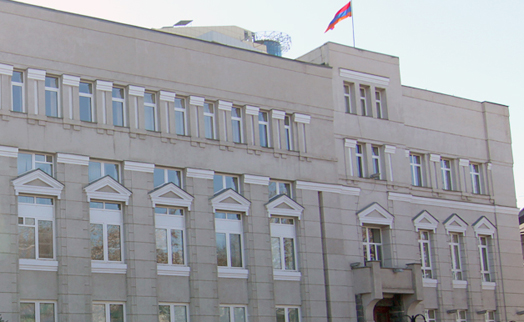
YEREVAN, March 15. /ARKA/. The Central Bank of Armenia joined the Eurasian Development Bank’s (EDB) settlement infrastructure and opened a correspondent account.
“The opening of an account by a central or national bank with a multilateral development institution is a rare occurrence, which confirms high trust in and demand for our system. The use of the EDB’s settlement system will make it possible for Armenia’s main financial institution to make payments in the national currencies of Armenia, Belarus, Kazakhstan, Kyrgyzstan, and Russia, including direct conversions. Access to the EDB’s payment system is expected to ensure better security of transactions as these will be made via the national payment system, minimize the number of intermediary banks, and reduce transaction costs,” said Nikolai Podguzov, Chairman of the EDB Management Board.
The use of the EDB’s settlement system will facilitate the integration of Armenia’s national payment infrastructure with those of other EAEU member countries.
The EDB is a member of the national payment systems of Armenia, Belarus, Kazakhstan, Kyrgyzstan, and Russia. The Bank maintains correspondent accounts with the central banks of all its member states, has direct access to foreign exchange trading on local exchanges, and acts as a market maker for national currency pairs.
In 2020, the Bank was certified to the ISO 27001:2013 international standard, having confirmed that its information security management system extends to settlement and clearing services.
The Bank’s settlement system is operating successfully in line with the national payment systems of its member countries. In addition to the Central Bank of Armenia, the current users of the EDB’s payment infrastructure are 66 counterparts from all the six member states, including commercial banks, stock exchanges, and depositories from EAEU countries.
The Eurasian Development Bank (EDB) is an international financial institution promoting integration and development in its member countries – Armenia, Belarus, Kazakhstan, the Kyrgyz Republic, Russia, and Tajikistan. The EDB’s charter capital totals US $7 billion.
The Bank was established in January 2006 by Russia and Kazakhstan and is headquartered in Almaty. Transport infrastructure, energy, chemical, mining, and mechanical engineering projects with a high integration effect account for the main part of the EDB’s portfolio. -0-


