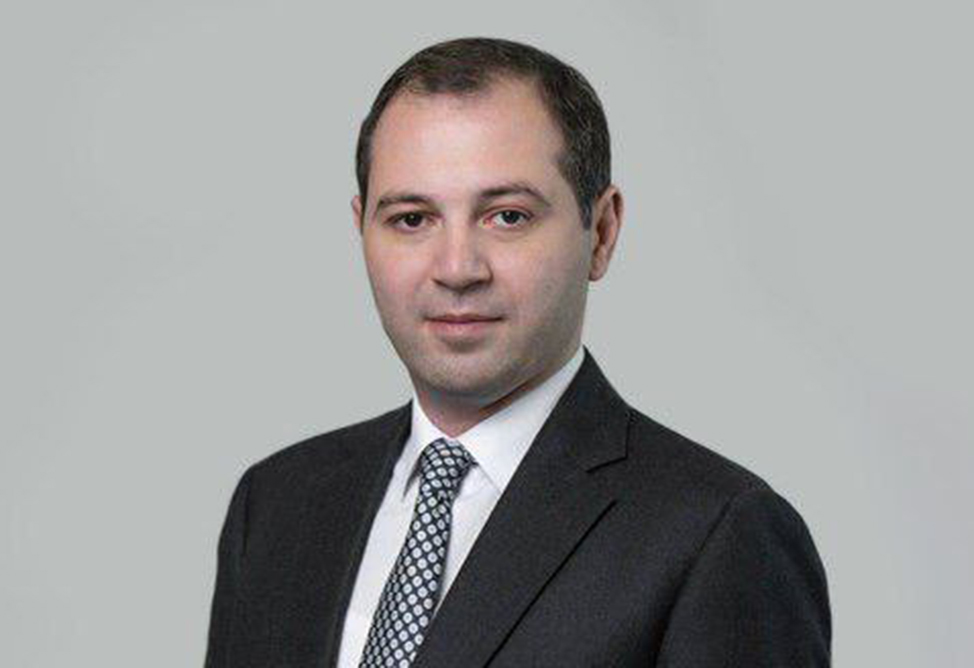
YEREVAN, December 15. /ARKA/. The capital market of Armenia is undergoing a significant transformation: there is an increasing interest in bonds, foreign investors are becoming more engaged, and there is a rising demand for new financial instruments, ranging from IPOs to digital assets. Ovak Ovakimyan, the Director of Freedom Broker Armenia, discussed with the ARKA news agency the trends that have been influencing investment behavior in 2025, the segments that might experience breakthroughs in 2026, and the challenges that Armenia’s capital market may encounter in the near future.
ARKA – What key trends have shaped Armenia’s capital market in 2025, and what is the main driver of investor activity?
O. Ovakimyan – In 2025, fixed-income instruments – corporate and government bonds – were the key interest for clients. This is the most understandable instrument for retail investors: they understand that they are investing a certain amount and receiving a clear annual interest rate.
ARKA – Which capital market segments showed the greatest growth and why?
O. Oovakimyan – Overall, there was a significant increase in the volume of corporate and government bond issues in 2025. Government bonds, as always, were the most sought-after fixed-income instrument. And for all issues completed this year, demand exceeded supply by 20-40%. This means that retail and, especially, institutional investors—banks, investment companies, credit institutions, and insurance companies—have begun to show interest.
The current market volume of corporate bonds is $1.7 billion. Considering that 7-8 years ago, these figures were approximately $300-400 million, we are seeing growing interest in this area.
However, Freedom Broker Armenia believes there is also interest in less traditional instruments for the Armenian market, such as equity participation, where the investor becomes the owner of the business. Trends among private investors in Armenia indicate that these instruments are also in demand, although not to the same extent as fixed-income instruments.
ARKA – In terms of the presence of foreign investors, what trends could you highlight?
O.Ovakimyan – I think we’ve made a kind of “quantum leap” compared to 2022. For example, Freedom Broker Armenia has a large number of foreign investors.
As for local businesses, they are growing. However, a great deal of work is needed, as the level of financial education, although improving, is still below average compared to developed capital markets. Foreign investors, seeing opportunities and instruments that provide easy access, are investing, including in the Armenian market.
An example is the placement of Team Holding’s bonds, for which Freedom Broker Armenia is acting as underwriter. The total volume of the offering is $35 million, and the process will take 3-4 months, but I expect more than half of the offering to be purchased by foreign investors. I consider this a good sign that foreign investors are investing in Armenian companies.
ARKA – What are the prospects for the development of the Armenian stock market? Is it possible to expand the range of public companies or launch new exchange-traded instruments in 2026?
O. Ovakimyan – We see demand and interest. The Armenian stock market is still small. Local clients, intending to purchase shares, are currently more likely to consider purchasing them on foreign exchanges. This is because this culture has not yet been formed and there are not many instruments available.
However, I believe this will change over time; in 2026, several companies will definitely go public on the Armenian Exchange AMX. I also think there will be development of other products, such as ETFs and structured products, which are very common globally, particularly at JP Morgan and Goldman Sachs. And I believe Armenia will also develop in this direction in 2026.
I believe that the stock market will expand both in terms of quantity and exchange liquidity. New instruments and investment opportunities for retail investors will also emerge. I believe 2026 will be a breakthrough year.
ARKA – How did internal macroeconomic factors such as inflation, interest rates, and the exchange rate influence clients’ investment decisions in 2025?
O. Ovakimyan – The slowing inflation has increased real bond yields, as when inflation is low, the Central Bank lowers the refinancing rate, which leads to lower bond yields and, consequently, higher bond prices. Armenia is currently in a cycle of rate cuts, and we forecast no interest rate increases in 2026. Therefore, the bond market is currently interesting, and I believe this trend will continue in 2026.
In terms of the exchange rate, I can say that the dram is a stable currency. Moreover, only two currencies in the world have not depreciated against the dollar over the past 10 years. These are, surprisingly, the Armenian dram and the Swiss franc. The stability and low volatility of the dram against the dollar is fueling the interest of investors looking to invest in drams, as while dollar yields are 6-8%, drams yield 10-11%, particularly 9-11% for corporate bonds.
ARKA – How do you assess the Central Bank’s current regulatory policy regarding the capital market, and what measures could enhance the development of this sector in 2026?
O. Ovakimyan – The Central Bank is pursuing a fairly balanced and consistent policy on the stability of the financial system, particularly in terms of digitalization and market transparency. To improve the capital market in Armenia, I would recommend that the regulator encourage companies to conduct IPOs.
Furthermore, it is worth working on the regulatory framework for company listings and the admission of new instruments. These procedures should become more digital and simpler to increase the attractiveness of this product for companies. The development and regulation of digital assets would also be of significant assistance. And the main thing the Central Bank, as well as we, other financial companies, and the exchange, should and are doing is improving the financial literacy of the population and introducing educational products and platforms. Over the next 3-5 years, I see a need to develop capital markets in Armenia specifically in the direction of financial literacy. These positions need to be strengthened.
ARKA – How might the entry into force of the Law on Cryptoassets impact the formation and regulation of digital assets in Armenia? Is the market ready for the integration of these instruments?
O. Ovakimyan – This is a good initiative. First of all, it establishes a legal framework for the tokenization of assets, which will enable the market to launch, for example, digital bonds, equity instruments, shares, and attract fintech companies and blockchain platforms. Much of this already exists in Armenia, but I would call it more of a gray area.
The crypto market, which is valued at several trillion dollars, cannot be ignored. Accordingly, this is definitely a plus for Armenia; it will help digitalize many services that were provided here at the level of the 1990s. Much will change for the better.
Starting January 1, 2026, investment companies will be able to apply for a license to provide cryptoasset services, and Freedom Broker Armenia will be participating. We believe this is a 21st-century financial instrument, and we need to keep up with the times. Therefore, this should become an important part of our business.
ARKA – What role did institutional investors play in 2025: pension funds, banks, and insurance companies, and how might their participation change in 2026?
O. Oovakimyan – Banks primarily use investment products for liquidity management. In the context of pension funds, a significant increase in their participation in corporate bonds is visible. As this market grows in Armenia, pension funds have the opportunity to explore new instruments and, consequently, diversify their portfolios, which is important for them. Insurance companies are expanding into longer-term securities, and the availability of instruments tied to a specific maturity is also crucial for them so they can accurately forecast their businesses. They lock in returns for 5, 10, and sometimes 20 years. And since these instruments are developing in Armenia and will continue to do so in 2026, insurance companies will use them.
ARKA – Which global macro trends—Fed policy, geopolitical factors, commodity market dynamics—have had the greatest impact on investor interest in Armenia?
O. Ovakimyan – Local and foreign investors are primarily influenced by inflation and interest rate policy. When rates rise, bond yields immediately fall, reducing their attractiveness and leading to a shift to the stock market, that is, the equity market. This year, even the S&P 500 hit a historic high. Since the stock market in Armenia is not very developed, the opposite is true – the development in terms of financial product sophistication is moving toward fixed-income instruments. Local clients prefer this instrument, while foreign investors prefer The stock market is a relative success, as it yields 2-2.5 times higher than the stock market. Regarding risks, anything can happen in the world, including a force majeure situation that could cause the Federal Reserve System and the Central Bank of Armenia to change their policies abruptly. We live in unstable times, and geopolitical risks can play a significant role.
ARKA – What lessons have private investors learned from 2025, and how have their behavior changed?
O. Ovakimyan – Private investors in Armenia have become more disciplined, they have more opportunities, they have begun to read more and listen to analytics, including that provided by our company.
We see a growing interest in the capital markets in Armenia. This is evident not only in the growth of our client base, but also in the marketing activities of other financial companies promoting brokerage products. Banks are also involved in this business; they have developed good platforms and provide good tools. We are moving towards digitalization, and things have become much easier for investors. Interesting analytical tools and educational products have emerged. People have begun to understand the importance of diversification, the importance of long-term thinking over short-term speculation, and the importance of broker quality.
ARKA: What macroeconomic and market factors, in your opinion, will determine Armenia’s investment climate in 2026?
O. Ovakimyan: These include local and global interest rates, geopolitical issues, and risks. If this environment is stable, we will see significant development both in our business and in Armenia as a whole, leading to economic growth.
An important area is the influx of foreign investment. Armenia, in general, is becoming much more attractive to foreign investors. Everyone needs to work towards this. Armenia will not develop without foreign capital. We need to create compelling products and develop attractive domestic opportunities so that foreign investors want to invest in Armenia, and we need to create this investment climate in the country. The trend in this direction is positive.
However, we still have many challenges. We want the diaspora to find investment instruments in Armenia, so that it’s not just charity. We need to offer them investment projects, including those related to social impact, albeit with lower returns. This will allow us to attract much more investment than we currently do.
Armenia’s development is only possible through digitalization; we need to adapt company infrastructure to digital assets. The trend is there, but we’re only 10% of the way there. We can’t operate and compete globally if we operate according to the rules of the 1990s.
ARKA – Which market segments have the greatest growth potential in 2026?
O. Ovakimyan – In terms of volume, Armenian corporate bonds. The trend of the past few years will continue and perhaps even increase exponentially in 2026. We are in numerous discussions with various businesses that have begun to consider going public to present their businesses in a highly transparent format. This is a new way of thinking for Armenia; the current willingness to go public applies more to IT and fintech companies, but also to traditional businesses.
New products will emerge, and their attractiveness will make the Armenian market more attractive to both local and foreign investors.
There is great potential for fintech and IT companies to prepare for IPOs, and this will also significantly boost the Armenian capital market. And given the emergence of crypto brokers, there will be an opportunity to digitize tokenized assets, creating additional opportunities for capital market development.
ARKA – What key challenges could impact capital markets in 2026, both global and specific to Armenia?
O. Ovakimyan: Regarding global challenges, these include Fed volatility and possibly increased regulation in global markets. Geopolitical upheavals could have an impact.
A challenge for the local market is its low liquidity. Even bond trading volumes on the exchange are not very large, and stock trading volumes are very small. In America, you can sell virtually any stock for tens or hundreds of millions of dollars with a single click, but in Armenia, you need to find a counterparty; such volumes don’t flow through the exchange. This liquidity situation can be improved if the number of participants increases. For 2026 and 2027, the market’s main task is to increase the liquidity of local products.
Furthermore, we need to work on encouraging companies to go public: many businesses find it easier to take out a bank loan secured by their buildings than to take advantage of existing investment products and opportunities.
ARKA: Which Freedom Broker Armenia products and services were most in demand in 2025, and what new solutions are being developed?
O. Ovakimyan: We were pleasantly surprised that Armenia has begun to shift toward fixed-income instruments, including those offered by Freedom Broker Armenia. In terms of segmentation, 50% of clients buy government bonds and 50% corporate bonds.
Next year, the trend will likely shift toward corporate bonds, as more opportunities will arise and more companies will go public and offer their bonds to the market. Corporate bond yields in dram-denominated instruments average 9-11%, while government bonds yield 7%. A 2-3% difference in yield is significant.
Last May, we received an underwriting license and a trustee license. Team Holding was the first company whose securities we placed, and in the context of trust management, we have plans for next year to launch interesting funds. These will be new products for Armenia, and they will be in demand. We have a product—D-accounts in Armenian drams—that offer repo rates between the client and the company, where we provide the client with a return, albeit a small one. The rate is lower than bonds, but it offers daily liquidity. It’s a bit more complicated for the client, but they receive a fixed-income instrument with daily liquidity. This instrument has been in demand this year and, I think, will be as popular next year.
“ARKA” – Ultimately, what three recommendations would you offer to investors as they formulate their strategy for 2026?
O. Ovakimyan – The first recommendation is portfolio diversification. This is the foundation of what an investor should study at the beginning of their journey with investment products. It’s important to remember that any product, even the most reliable, has risk, and with diversification, even in the worst-case scenario, only part of the portfolio will suffer, significantly reducing the overall risk.
The second recommendation is to use fundamental strategies rather than technical ones and to research companies. Relying solely on technical analysis is, after all, the more speculative part of a portfolio. The foundation of the portfolio should be based on fundamental strategies.
And the third recommendation is to choose a financial institution with which you are willing to go the distance. You should choose a reliable partner, and I am confident that Freedom Broker Armenia is one of them. We are committed to developing the capital market, educating investors, providing excellent service, and striving to ensure that investors who have gone through this journey with us can recommend us as a reliable partner.-0-