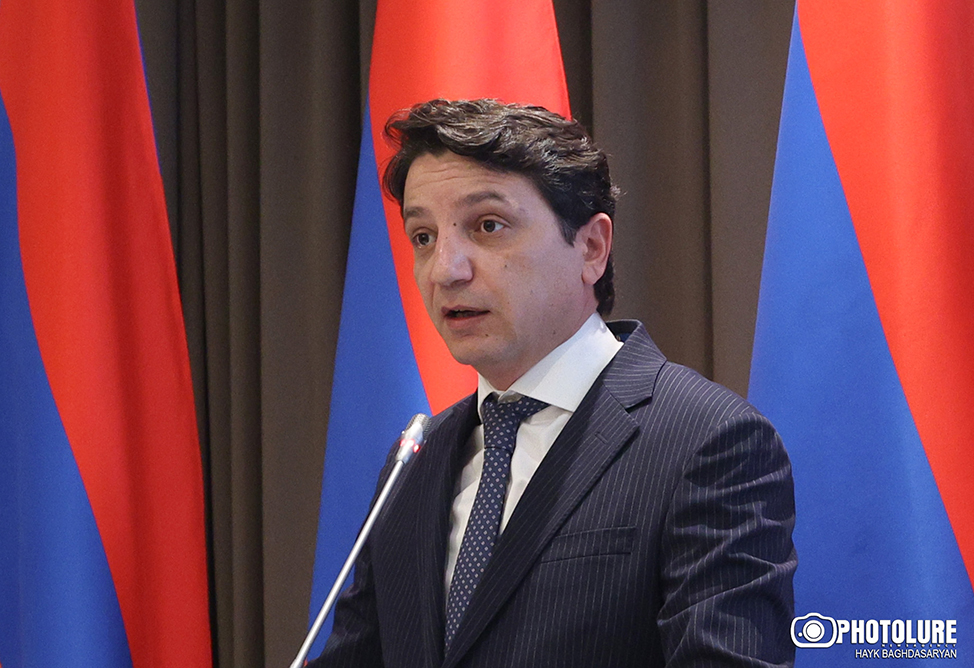
YEREVAN, March 18. /ARKA/. Armenia has introduced a new model for assessing public debt sustainability, while maintaining the previous ones. This was announced by Armenian Finance Minister Vahe Hovhannisyan at a meeting of the National Assembly Standing Committee on Economic Affairs.
“The previous models are analytical tools of the International Monetary Fund and the World Bank that allow for assessing public debt risks, sources of vulnerability, and policy directions. The new tool significantly expands the range of possible risk sources and provides a more comprehensive assessment of the risk level,” Hovhannisyan said.
Earlier, Marine Melikyan, Acting Head of the Public Debt Management Department of the Ministry of Finance of Armenia, announced that a new version of the Law “On Public Debt” entered into force in Armenia on January 8, 2026, introducing certain legislative changes in the area of public debt management.
According to her, under the new regulations, public debt is currently the sum of government debt and community debt, while Central Bank debt and guarantees are excluded from the public debt structure.
At the end of 2025, Armenia’s total public debt included the sum of external and domestic debt. External debt was calculated as the sum of government debt and Central Bank debt, while domestic debt was calculated as the sum of government treasury bonds purchased by residents, foreign currency government bonds purchased by residents, and domestic guarantees.
According to data released by the Ministry of Finance, Armenia’s total public debt as of December 31, 2025, amounted to $14,531.3 million, compared to $12,842.2 million as of December 31, 2024. This represents a 13.1% year-over-year increase.