



YEREVAN, December 17. / ARKA /.The average exchange rate of a U.S. dollar last week at NASDAQ OMX Armenia stock exchange fell by 0.16% to 407.05 drams with weekly trading totaling $14.26 million, which was 28.52% less than in the previous week. The average selling rate of a cash greenback rose by 0.09% to 409.15 drams on December 15.
At the beginning of last week the U.S. currency’s value dropped as some of market participants were fixing their positions. But in the second half of the trading week, the greenback managed to recover again due to the continued demand on part of importers and individuals for the greenback, as well as to moderate devaluation moods.
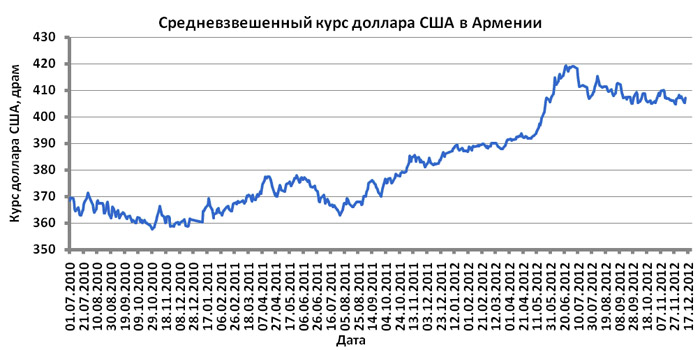
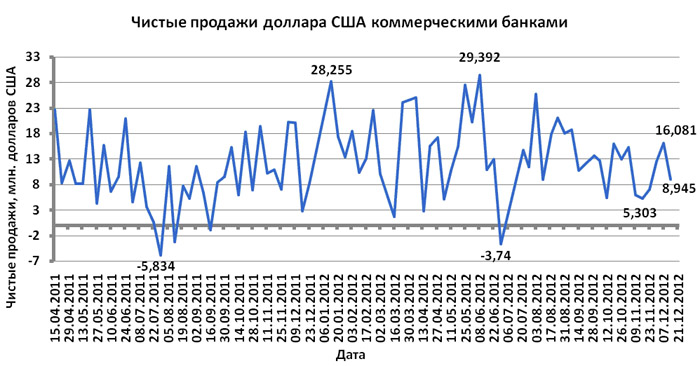
We believe that this week the U.S. dollar in Armenia is likely to rise somewhat because of the ongoing “budget cliff” in the United States. According to the Central Bank of Armenia, net trading at intra-exchange market by commercial banks last week grew to $8.945 million, up 44.38% compared to the previous week. This in view we expect the average selling rate of cash dollar this week to be within 407.0 – 412.0 drams.
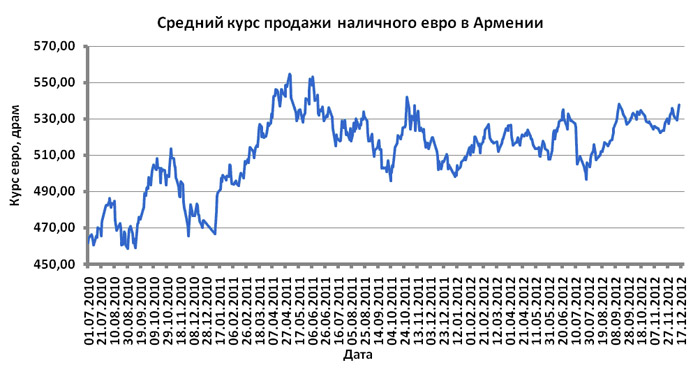
Last week, the European single currency’s value grew along with mounting demand for assets sensitive to economic growth. Besides, new measures of US federal reserve to stimulate the economy, and the final decision regarding the provision of the next tranche of financial aid to Greece added some optimism.
This week the euro’s dynamics in the world and, consequently, in Armenia, will be determined by economic news from the U.S. and the eurozone. Of American news we would like to single out the publication of the U.S. GDP for the third quarter, as well as the index of economic activity from the Chicago Fed, numbers of consumer spending, the volume of orders for durable goods and housing market in November. Of European news we would like to highlight the publication of data on the business environment by German IFO in December. This all in view we expect the average selling rate of euro cash in Armenia this week to be within the 530 – 545 drams.
The average selling rate of the Russian ruble last week rose by 0.53% to 13.40 drams due to a higher value of the Russian ruble against the U.S. dollar. The value of the ruble against the U.S. dollar and, consequently the drams this week will be depending on macroeconomic data from the U.S. and the euro area, as well as the dynamics of oil prices. The average selling rate of a cash ruble in Armenia is likely to be in the range of 13.30 – 13.50 drams.
Mikael Verdyan, an analyst of FOREX CLUB, specially for ARKA
Views of the author do not necessarily represent those of ARKA news agency


